Vitamin B12 Status in Health and Disease
Vitamin B12, or cobalamin, is an essential water-soluble vitamin that plays a foundational role in human physiology. Unlike many other vitamins, its structure is unique in that it contains the mineral cobalt. Its significance extends beyond general health, being a critical factor in the function and development of the central nervous system, the formation of healthy red blood cells, and the synthesis of DNA.
Maintaining an adequate B12 status is vital, as both deficiency and—in specific contexts—elevated levels can signal or contribute to significant health issues.
The Essential Role of Vitamin B12
B12 acts as a cofactor for two crucial enzymatic reactions in the body:
- Methionine Synthase: This enzyme requires B12 to convert homocysteine into methionine. Methionine is essential for the formation of S-adenosylmethionine (SAMe), a “universal methyl donor” involved in nearly 100 different methylation reactions, including those necessary for the proper function of DNA, RNA, proteins, and lipids, particularly in nerve cells.
- L-methylmalonyl-CoA Mutase: This enzyme, also B12-dependent, converts methylmalonyl-CoA to succinyl-CoA, a key step in fat and protein metabolism. A defect in this pathway leads to the accumulation of methylmalonic acid (MMA), which is believed to contribute to the neurological damage seen in B12 deficiency.
Causes of Deficiency: Beyond Diet
B12 is almost exclusively found in animal-sourced foods (meat, fish, dairy, eggs), making dietary intake a primary concern for those following vegan or strict vegetarian diets unless they use fortified foods or supplements.
However, the most common cause of deficiency is not low intake but malabsorption—the body’s inability to properly extract and utilize the vitamin from food. The absorption process is complex, requiring:
- Stomach Acid (Hydrochloric Acid): To release B12 from the food protein.
- Intrinsic Factor (IF): A protein produced by the stomach’s parietal cells, which binds to B12, forming a complex that is absorbed in the small intestine (ileum).
Key risk factors and causes of malabsorption include:
- Pernicious Anemia: An autoimmune condition where the body attacks the parietal cells, leading to a lack of intrinsic factor. This is the most common cause of severe B12 deficiency.
- Older Age: Reduced stomach acid production (achlorhydria) is common in those over 50, hindering the initial release of B12 from food.
- Gastrointestinal Surgery: Procedures like gastric bypass or removal of the ileum reduce the surface area or mechanism for B12 absorption.
- Digestive Disorders: Conditions like Crohn’s disease and Celiac disease can damage the small intestine, impairing absorption.
- Medications: Long-term use of certain drugs, particularly Proton Pump Inhibitors (PPIs) and the diabetes drug Metformin, can interfere with B12 absorption by reducing stomach acid.
Symptoms and Associated Diseases
The clinical manifestations of B12 deficiency can be slow to develop (due to large liver stores) and highly varied, often overlapping with other conditions.
Hematological (Blood) Effects
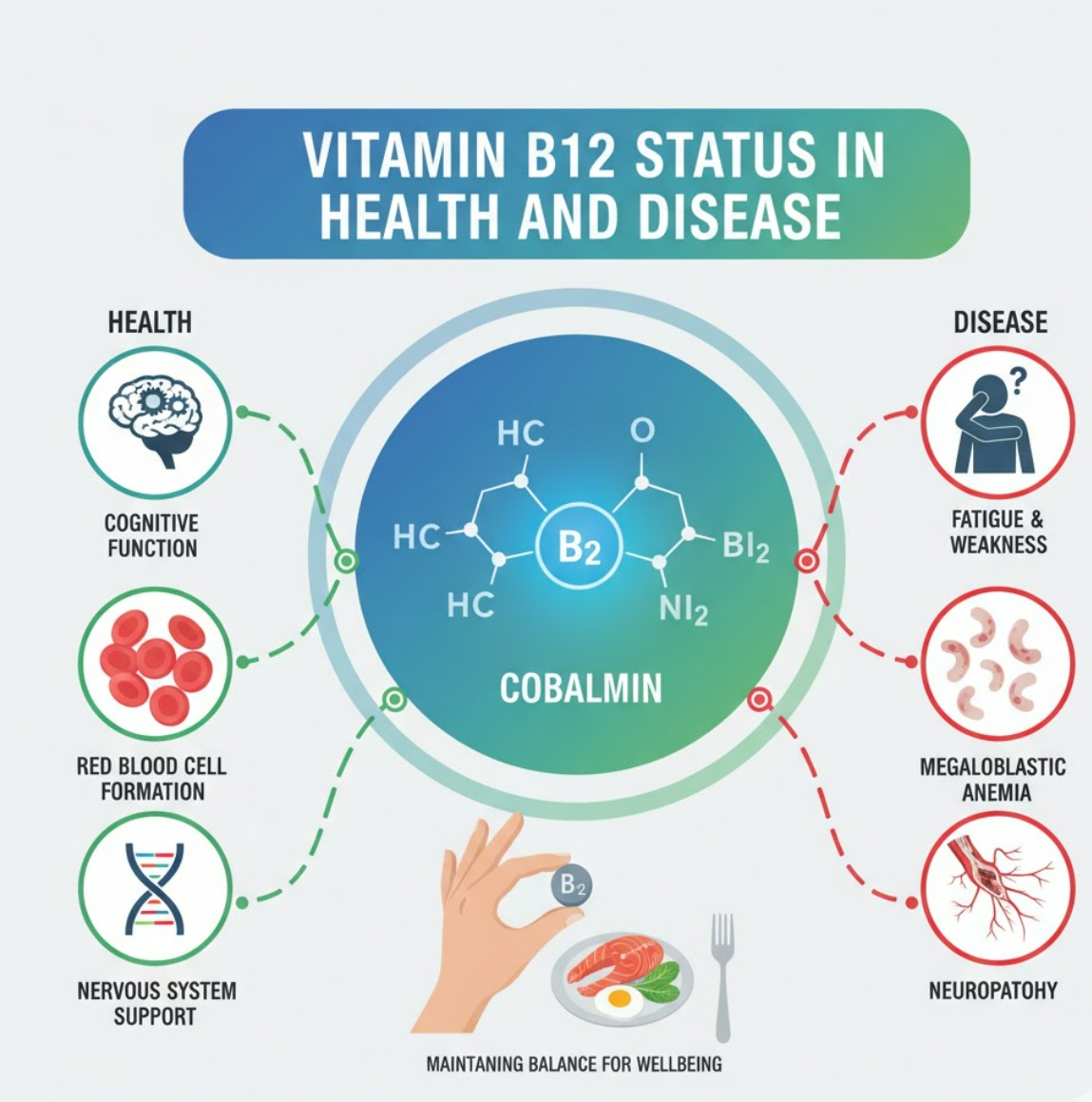
The most recognizable feature is Megaloblastic Anemia, a condition where the bone marrow produces abnormally large, immature, and dysfunctional red blood cells. Symptoms include:
- Extreme fatigue and weakness.
- Shortness of breath.
- Pale or slightly yellowish skin (jaundice).
Neurological and Psychiatric Effects
These symptoms can appear and progress even before anemia is evident, and if left untreated, they may become irreversible.
- Peripheral Neuropathy: Characterized by numbness or tingling (paresthesia) in the hands and feet.
- Cognitive Decline: Brain fog, memory loss, difficulty concentrating, and impaired judgment.
- Mood Disturbances: Depression, irritability, and in severe cases, psychosis (“megaloblastic madness”) and dementia-like symptoms.
- Motor Issues: Poor balance, difficulty walking (ataxia), and muscle weakness.
B12 and Other Conditions
A key metabolic consequence of B12 deficiency is elevated plasma homocysteine. While B12 supplementation can effectively lower homocysteine, studies have yet to consistently prove that this intervention reduces the risk of cardiovascular disease or Alzheimer’s disease in the general population.
High B12 Status
While B12 is a water-soluble vitamin with very low toxicity (excess is usually excreted in urine), a high serum B12 level (hypercobalaminemia) is not always benign.
If the high level is not solely due to high-dose supplementation, it can be a marker for underlying, potentially serious medical conditions, as B12 is transported by specific proteins that can be affected by disease. Conditions linked to pathologically high B12 levels include:
- Liver Disease (e.g., cirrhosis, hepatitis).
- Kidney Failure.
- Certain Myeloproliferative Neoplasms (blood cancers, such as chronic myelogenous leukemia).
In these cases the elevated B12 is a symptom of the disease, not the cause.
In conclusion, Vitamin B12 is a cornerstone nutrient whose status is critical for systemic health. Its deficiency is a multifaceted clinical challenge rooted in both dietary intake and complex absorption mechanisms. Early detection and appropriate treatment, which often involves high-dose oral supplementation or injections, are essential to prevent severe and potentially permanent neurological damage.