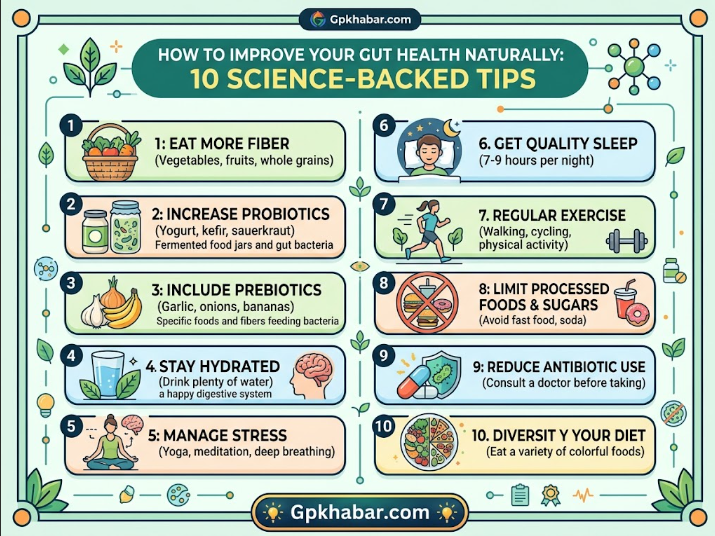
How to Improve Your Gut Health Naturally: 10 Science-Backed Tips
Learn how to improve gut health naturally with 10 science-backed tips, including eating more fiber, fermented foods, staying hydrated, sleeping well, and supporting a healthy gut microbiome.
Your gut does much more than digest the food you eat. Your digestive system is home to a complex community of microorganisms known collectively as the gut microbiome. These microorganisms interact with the food you eat and are involved in digestion and other processes throughout the body.
The good news is that supporting your gut health does not necessarily require expensive supplements, restrictive diets, or complicated routines. Everyday choices—including eating a variety of plant foods, getting enough fiber, choosing some fermented foods, staying active, and getting adequate sleep—can help create conditions that support a healthy digestive system.
Research also shows that there is no single “perfect” gut microbiome. Each person’s microbiome is influenced by factors such as diet, environment, genes, and medications.
Here are 10 practical ways to support your gut health naturally.
What Is Gut Health?
Gut health generally refers to the condition and functioning of your gastrointestinal system and the microorganisms living within it.
A healthy digestive system should be able to digest and absorb nutrients, move food and waste through the digestive tract, and maintain an appropriate relationship with the microorganisms that live there.
The gut microbiome contains many different microorganisms. Some can be helpful, while others can potentially cause problems when conditions allow them to grow excessively.
Diet is one of the factors that can influence the composition and activity of the gut microbiome. In particular, dietary fiber provides food for microorganisms in the colon, where some fibers are fermented and produce compounds such as short-chain fatty acids.
1. Eat More Fiber-Rich Foods
One of the most practical ways to support gut health is to include more naturally fiber-rich foods in your meals.
Fiber is found in plant foods such as:
- Beans and lentils
- Oats and other whole grains
- Apples, pears, berries, and other fruits
- Broccoli, carrots, leafy greens, and other vegetables
- Nuts and seeds
- Potatoes and other root vegetables
Different types of fiber can have different effects. Some fibers help add bulk to stool and support regular bowel movements, while others can be fermented by gut microorganisms.
Research funded by the National Institutes of Health has found that the health effects of fiber can vary depending on the type of fiber, the amount consumed, and the individual.
Instead of suddenly adding very large amounts of fiber, increase your intake gradually. A rapid change can cause temporary gas or bloating in some people.
2. Eat a Variety of Plant Foods
Eating the same few foods every day may make meal planning easy, but variety can be useful for your gut microbiome.
Try rotating different types of fruits, vegetables, beans, whole grains, nuts, and seeds throughout the week.
For example, you might have oats and berries for breakfast, lentils and vegetables for lunch, and brown rice with beans and mixed vegetables for dinner.
The goal isn’t to find one magical “superfood.” Instead, focus on creating an overall eating pattern that gives your body different types of nutrients and fiber.
Harvard’s Nutrition Source notes that a diet rich in fiber-containing plant foods can influence the types and amounts of microorganisms living in the intestine.
3. Include Fermented Foods
Fermented foods are another option to consider when building a gut-friendly diet.
Examples include:
- Yogurt with live cultures
- Kefir
- Kimchi
- Sauerkraut
- Miso
- Some fermented vegetables
However, an important distinction is often overlooked: not every fermented food contains probiotics with demonstrated health benefits.
The NIH explains that probiotics are specific live microorganisms that provide a health benefit when consumed in adequate amounts. Simply being a fermented food does not automatically mean a product has proven probiotic effects.
If you tolerate fermented foods well, including options such as yogurt with live cultures can be a simple addition to a balanced diet.
4. Choose Whole Foods More Often
Your overall dietary pattern may matter more than any single food.
A diet centered around vegetables, fruits, legumes, whole grains, nuts, seeds, and other minimally processed foods naturally provides a range of fibers and nutrients.
This doesn’t mean you have to completely eliminate processed foods. Instead, consider making whole or minimally processed foods the foundation of most meals.
For example, replace a highly processed snack with fruit and nuts, or choose a meal containing beans and vegetables instead of relying on heavily processed foods every day.
A realistic approach is usually easier to maintain than an extremely restrictive diet.
5. Stay Hydrated
Water plays an important role in digestion and helps keep stool softer and easier to pass.
Adequate hydration is particularly useful when you’re increasing your fiber intake. Fiber absorbs water, and drinking enough fluids can help your digestive system handle a higher-fiber diet.
Rather than focusing on a single universal water target, pay attention to your thirst, activity level, climate, and individual circumstances.
If you’re increasing fiber, make gradual changes while maintaining regular fluid intake.
6. Exercise Regularly
Your gut health isn’t determined by food alone.
Regular physical activity supports overall health and may also benefit digestive function. Walking, cycling, swimming, strength training, or another activity you enjoy can be part of a healthy lifestyle.
You don’t necessarily need an intense workout every day. A regular walking routine can be a practical starting point for people who are currently inactive.
The most useful exercise routine is one you can consistently maintain.
7. Prioritize Good Sleep
Sleep is another important part of overall health that is sometimes overlooked when people focus exclusively on diet.
Rather than trying to “fix” your gut with supplements, consider your complete lifestyle—including your sleep schedule.
Aim for a consistent sleep routine and create an environment that makes it easier to get adequate rest.
If you regularly have difficulty sleeping despite making healthy lifestyle changes, consider discussing the problem with a healthcare professional.
8. Be Careful With Probiotic Supplements
Probiotic supplements are widely marketed for digestive and general health, but more is not necessarily better.
Different probiotic products contain different microorganisms and strains, and research findings can vary depending on the specific product and health condition being studied.
The NIH notes that many commercial probiotic products have not been adequately studied, making it difficult to determine whether a particular product will provide a meaningful benefit.
The National Center for Complementary and Integrative Health also notes that some probiotics have shown benefits for particular conditions, but strong evidence does not support every health claim made about probiotics.
Therefore, don’t assume that a supplement with a higher number of colony-forming units (CFUs) is automatically better.
If you’re considering a probiotic supplement—especially if you have an underlying health condition, take medications, or have a weakened immune system—talk with a healthcare professional first.
9. Increase Fiber Gradually
Eating more fiber is generally a useful dietary goal, but suddenly changing from a low-fiber diet to a very high-fiber diet can lead to gas, bloating, or abdominal discomfort.
A better strategy is to make gradual changes.
For example, you could:
Week 1: Add fruit to breakfast.
Week 2: Add vegetables to one additional meal.
Week 3: Replace a refined grain with a whole-grain option.
Week 4: Add beans or lentils to several meals.
This gradual approach gives your digestive system time to adjust.
It also makes healthy eating feel less like a temporary diet and more like a sustainable lifestyle.
10. Pay Attention to Your Individual Tolerance
There is no single gut-health diet that works perfectly for everyone.
A food that feels great for one person may cause discomfort for another. People with conditions such as irritable bowel syndrome (IBS), inflammatory bowel disease, food allergies, or other digestive disorders may need individualized dietary guidance.
For example, some people with IBS may benefit from specific dietary approaches, while evidence for probiotics in treating overall IBS symptoms remains uncertain.
Instead of eliminating large numbers of foods based on internet trends, pay attention to consistent patterns in your symptoms.
Keeping a simple food and symptom diary for a short period may help you identify patterns that you can discuss with a healthcare professional.
Foods That Can Support a Healthy Gut
There is no single food that can “heal” your gut overnight. However, a balanced diet containing a variety of plant foods can provide fiber and other nutrients that support digestive health.
Consider regularly including:
| Food | Why it can be useful |
|---|---|
| Oats | Provides dietary fiber |
| Beans and lentils | Rich sources of plant fiber |
| Berries | Provide fiber and plant compounds |
| Apples and pears | Provide fiber |
| Leafy vegetables | Provide fiber and micronutrients |
| Nuts and seeds | Provide fiber and healthy fats |
| Whole grains | Provide different types of dietary fiber |
| Yogurt with live cultures | Can provide live microorganisms |
| Fermented vegetables | Can provide live microorganisms, depending on the product |
Remember that individual fermented foods don’t all have the same microbial content or proven probiotic effects.
What About “Gut Detox” Products?
You may see products online claiming to detoxify, cleanse, or completely reset your gut.
Be skeptical of these claims.
Your digestive system already has natural processes for processing food and eliminating waste. You generally don’t need an expensive detox program to support normal digestion.
Instead, focus on fundamentals:
- Eat a varied diet
- Get enough fiber
- Drink adequate fluids
- Stay physically active
- Get sufficient sleep
- Limit unhealthy dietary patterns
- Seek medical advice for persistent symptoms
A sustainable routine is more useful than a short-term “detox.”
When Should You See a Doctor?
Occasional digestive discomfort can happen to anyone, but persistent or severe symptoms should not simply be blamed on an “unhealthy gut.”
Speak with a healthcare professional if you experience symptoms that are persistent, severe, worsening, or unusual for you.
Depending on the situation, concerning symptoms can include unexplained weight loss, blood in the stool, persistent vomiting, severe abdominal pain, ongoing diarrhea or constipation, difficulty swallowing, or significant changes in bowel habits.
These symptoms can have many possible causes, so self-diagnosing based on social media or online articles isn’t recommended.
The Bottom Line
Improving your gut health doesn’t have to involve complicated diets or expensive supplements.
Start with simple habits: eat a variety of plant foods, gradually increase fiber, include suitable fermented foods, stay hydrated, exercise regularly, and prioritize sleep.
Most importantly, think about your overall eating and lifestyle pattern rather than searching for one miracle food or supplement. Research continues to uncover how diet, the gut microbiome, and overall health interact, and many questions remain under investigation.
If you have ongoing digestive symptoms or a diagnosed medical condition, personalized advice from a qualified healthcare professional is more appropriate than relying on a general gut-health plan.
Frequently Asked Questions
1. What is the fastest way to improve gut health?
There isn’t a scientifically established overnight fix for gut health. A practical starting point is to gradually increase fiber-rich plant foods, eat a varied diet, stay hydrated, exercise regularly, and maintain healthy sleep habits.
2. What foods are best for gut health?
Fiber-rich foods such as beans, lentils, vegetables, fruits, whole grains, nuts, and seeds can support a healthy diet and provide food for gut microorganisms. Fermented foods such as yogurt with live cultures may also be useful.
3. Are probiotics necessary for a healthy gut?
Not necessarily. Probiotic supplements contain specific microorganisms, and their benefits depend on the strain, dose, and health condition being studied. Many products have not been adequately studied.
4. How long does it take to improve gut health?
There is no universal timeline. Changes in diet can affect the gut microbiome relatively quickly, but meaningful health outcomes depend on the individual, the dietary changes, and other lifestyle factors.
5. Does drinking more water improve gut health?
Adequate hydration supports normal digestion and is particularly important when increasing dietary fiber. However, drinking excessive amounts of water does not automatically create a healthier gut.
6. Is yogurt good for gut health?
Yogurt can be a useful food, particularly when it contains live cultures. However, not every fermented food or yogurt product has the same probiotic properties, so check the product information if you’re specifically looking for live microorganisms.
7. Should I take a gut-health supplement?
Not everyone needs a supplement. Evidence varies substantially between products and health conditions. If you are considering probiotics or another supplement, especially if you have a medical condition or take medications, discuss it with a healthcare professional first.