Simple Ways to Lower Stress and Improve Your Mental Well-Being
Stress is a normal part of life. A busy workday, financial concerns, family responsibilities, relationship problems, health worries, and major life changes can all create stress.
A certain amount of stress can be useful. It can help you respond quickly to a challenge or motivate you to complete an important task. The problem often begins when stress becomes frequent, overwhelming, or difficult to switch off.
Long-lasting stress can affect sleep, concentration, mood, energy, and daily routines. That’s why learning practical ways to manage stress is an important part of taking care of your overall health.
The good news is that stress management doesn’t always require major lifestyle changes. Small, consistent habits can make a meaningful difference.
Here are some simple, evidence-informed ways to reduce stress and support your mental well-being.
What Is Stress?
Stress is the body’s response to a perceived challenge or threat.
When you encounter a stressful situation, your body can activate a “fight-or-flight” response. Hormones and other physiological changes prepare you to respond.
You may notice:
- A faster heartbeat
- Faster breathing
- Muscle tension
- Increased alertness
- Sweating
- Changes in digestion
- Difficulty relaxing
This response can be helpful when you need to deal with an immediate challenge.
The problem is that modern stressors don’t always disappear quickly. Work pressure, financial concerns, caregiving responsibilities, relationship difficulties, or ongoing uncertainty can keep the stress response activated for long periods.
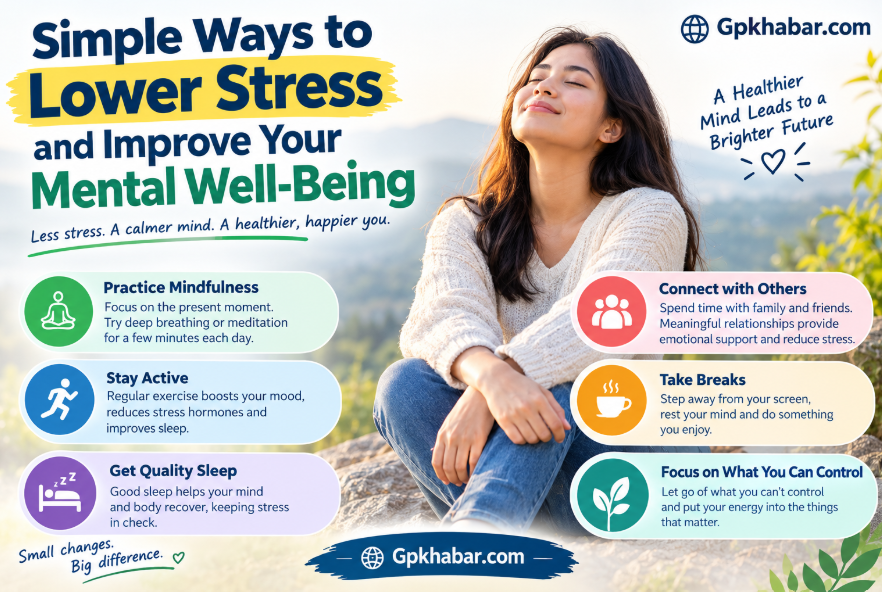
1. Take a Few Minutes for Slow, Deep Breathing
One of the simplest things you can try during a stressful moment is controlled breathing.
When people feel anxious or stressed, they may begin breathing more quickly or shallowly. Slowing your breathing can help create a brief pause between the stressful situation and your reaction to it.
Try this simple exercise:
- Sit somewhere comfortable.
- Relax your shoulders.
- Breathe in slowly through your nose.
- Allow your abdomen to expand naturally.
- Exhale slowly.
- Repeat for several minutes.
You don’t need a special device or app.
The goal isn’t to eliminate every stressful thought. Instead, give your body a few minutes to settle.
If slow breathing makes you dizzy or uncomfortable, return to normal breathing.
2. Move Your Body Regularly
Physical activity is one of the most useful habits for both physical and mental health.
You don’t need to become a serious athlete to benefit from movement.
Try:
- Walking
- Cycling
- Swimming
- Dancing
- Stretching
- Yoga
- Strength training
- Playing a sport
Even a short walk can provide a break from work or stressful thoughts.
Regular physical activity can also support sleep, energy, and overall well-being.
If you’re currently inactive, start with something manageable. A 10- or 20-minute walk is better than creating an ambitious exercise plan that you abandon after a few days.
3. Protect Your Sleep
Stress and sleep can influence each other.
Stress can make it difficult to fall asleep, while inadequate sleep can make it harder to cope with everyday challenges.
Adults generally need at least seven hours of sleep regularly, although individual needs vary.
To support better sleep:
- Keep a relatively consistent bedtime.
- Wake up around the same time each day.
- Reduce stimulating activities before bed.
- Keep your bedroom comfortable and quiet.
- Avoid excessive caffeine late in the day.
- Give yourself enough time to sleep.
If you’re regularly exhausted despite getting enough time in bed, consider talking with a healthcare professional.
4. Spend Time Outside
Going outside can provide a useful mental break.
A short walk in a park, sitting in your garden, or simply getting some daylight can interrupt a cycle of work and screen use.
You can combine outdoor time with exercise by taking a walk around your neighborhood.
You don’t have to spend hours outside. Even a short break can give you an opportunity to step away from whatever is causing immediate stress.
5. Stay Connected With People You Trust
When people are stressed, they sometimes isolate themselves.
However, talking with someone you trust can make difficult situations feel more manageable.
You might:
- Call a friend
- Talk with a family member
- Meet someone for tea or coffee
- Join a community group
- Participate in a hobby
- Speak with a counselor
You don’t necessarily need someone to solve your problem.
Sometimes being able to explain what you’re experiencing to a supportive person is valuable by itself.
6. Break Large Problems Into Smaller Tasks
Stress can become overwhelming when everything feels urgent at the same time.
Instead of asking, “How am I going to fix everything?” try asking:
“What is the next small thing I can do?”
For example, if you’re overwhelmed by work, make a short list of the three most important tasks for today.
If you’re dealing with a complicated personal problem, identify one practical step you can take.
Breaking a large problem into smaller actions can make it feel more manageable.
7. Limit Constant News and Social Media Checking
Technology can keep your brain in a state of constant stimulation.
Checking news, messages, and social media repeatedly can make it difficult to mentally disconnect.
This doesn’t mean you need to stop using social media completely.
Instead, consider:
- Turning off unnecessary notifications
- Creating specific times to check messages
- Taking regular screen breaks
- Avoiding endless scrolling before bed
- Unfollowing accounts that consistently make you feel distressed
Being informed is useful, but you don’t need to consume stressful information every minute of the day.
8. Watch Your Caffeine Intake
Caffeine can increase alertness, which is useful when you’re tired.
However, too much caffeine can cause or worsen symptoms such as restlessness, nervousness, a racing heartbeat, and sleep difficulties in some people.
Coffee isn’t the only source.
Caffeine can also be found in:
- Tea
- Energy drinks
- Cola
- Chocolate
- Some medications and supplements
If you feel unusually anxious or have trouble sleeping, consider whether your caffeine intake could be contributing.
You don’t necessarily need to eliminate caffeine. Reducing the amount or avoiding it later in the day may be enough.
9. Eat Regular, Balanced Meals
When you’re busy or stressed, it’s easy to skip meals or rely heavily on highly processed convenience foods.
A balanced diet supports your body’s overall nutritional needs and can help maintain steady energy throughout the day.
Try to include:
- Vegetables
- Fruits
- Whole grains
- Beans and lentils
- Nuts and seeds
- Protein-rich foods
- Healthy sources of fat
There is no single “stress-relief food” that can eliminate stress.
Instead, focus on your overall eating pattern.
10. Make Time for Activities You Enjoy
Stress management shouldn’t consist entirely of chores and responsibilities.
Enjoyable activities provide an opportunity to recharge.
Depending on your interests, this might include:
- Reading
- Gardening
- Cooking
- Listening to music
- Drawing
- Playing an instrument
- Watching a favorite movie
- Spending time with friends
- Playing with a pet
- Pursuing a hobby
You don’t need a large block of free time.
Even 15–30 minutes spent doing something enjoyable can give you a mental break.
11. Try Mindfulness or Meditation
Mindfulness involves paying attention to the present moment rather than constantly focusing on past events or future worries.
Meditation is one way to practice mindfulness.
A simple approach is to sit quietly and focus on your breathing. When your attention wanders, gently bring it back.
You don’t need to meditate for an hour.
Starting with five minutes may be more realistic.
Some people find mindfulness helpful for managing stress, while others prefer exercise, social connection, creative activities, or talking with someone.
Find what works for you.
12. Learn to Say No
Taking on too many responsibilities can create unnecessary stress.
If your schedule is already full, accepting every request may leave little time for rest or essential tasks.
Saying no doesn’t mean you don’t care about other people.
It can simply mean recognizing your limits.
Before agreeing to something, ask yourself:
Do I have the time, energy, and ability to take this on right now?
If the answer is no, consider whether you can decline, postpone, or delegate the task.
13. Create a Simple Daily Routine
When everything feels unpredictable, a basic routine can provide structure.
Your routine doesn’t need to be complicated.
For example:
Morning: Wake up, drink water, eat breakfast, and get some daylight.
Daytime: Work or study, take regular breaks, eat balanced meals, and move your body.
Evening: Reduce demanding tasks, spend time with people you enjoy, and prepare for sleep.
A predictable routine can reduce the number of decisions you need to make throughout the day.
14. Practice Positive Self-Talk
Stress can change the way you talk to yourself.
A difficult situation can quickly turn into thoughts such as:
“I’m going to fail.”
“I can’t handle this.”
“Everything is going wrong.”
Try replacing overly harsh thoughts with something more realistic.
For example:
“This is difficult, but I can deal with one step at a time.”
The goal isn’t to pretend everything is perfect.
It’s to avoid making a difficult situation even harder through unnecessarily negative self-talk.
15. Write Down What’s Worrying You
Writing can help organize thoughts that are repeatedly circling in your mind.
Try keeping a simple journal.
Write down:
- What is bothering you
- What you can control
- What you cannot control
- One action you can take
- Something that went well today
You don’t need to write pages.
Even a few minutes can help you turn vague worries into specific problems that may be easier to address.
Healthy Stress Management vs. Quick Fixes
When people feel overwhelmed, they may look for immediate ways to escape uncomfortable feelings.
Some coping methods can create additional problems over time.
Examples include excessive alcohol use, smoking, recreational drug use, overeating, compulsive spending, or staying awake all night watching videos.
These strategies may provide temporary distraction but don’t address the underlying source of stress.
Healthier coping strategies—such as movement, sleep, social support, relaxation techniques, and problem-solving—are more sustainable.
When Stress Becomes a Serious Problem
Everyone experiences stress.
But if stress becomes persistent and starts interfering with your daily life, relationships, work, sleep, or ability to function, it may be time to seek professional support.
Consider talking with a healthcare professional or mental health professional if you:
- Feel overwhelmed most of the time
- Have persistent anxiety or sadness
- Can’t sleep because of worry
- Have difficulty functioning at work or school
- Withdraw from people you normally enjoy spending time with
- Use alcohol or drugs to cope with stress
- Experience frequent panic symptoms
- Feel unable to cope with everyday responsibilities
Getting professional help isn’t a sign of weakness. Mental health professionals can help identify what is contributing to your distress and discuss appropriate treatment or coping strategies.
If You Are in Immediate Danger
If you are thinking about hurting yourself or believe you may be in immediate danger, seek urgent help from local emergency services or go to the nearest emergency department.
If possible, stay with someone you trust rather than dealing with an immediate crisis alone.
A Simple 10-Minute Stress-Relief Routine
If you don’t know where to start, try this simple routine:
Minutes 1–2: Take slow, comfortable breaths.
Minutes 3–5: Stretch your shoulders, neck, and legs.
Minutes 6–8: Walk around outside or around your home.
Minutes 9–10: Write down the most important thing you need to do next.
This won’t solve every stressful situation, but it can give you a short reset and help you approach the next task more calmly.
Frequently Asked Questions
What is the fastest way to reduce stress?
There isn’t one method that works for everyone. Slow breathing, a short walk, stepping away from a stressful situation, talking to someone you trust, and taking a brief break can help some people manage acute stress.
How can I reduce stress naturally?
Regular physical activity, adequate sleep, healthy eating, social connection, relaxation techniques, mindfulness, and maintaining reasonable boundaries can all be part of a healthy stress-management routine.
Can exercise reduce stress?
Regular physical activity can support mental and physical well-being and may help people manage stress. You don’t need intense workouts; walking and other moderate activities can be practical starting points.
Does lack of sleep increase stress?
Poor sleep can make it harder to cope with everyday stress and can contribute to irritability, difficulty concentrating, and daytime fatigue. Maintaining a consistent sleep schedule is an important part of overall stress management.
Can too much caffeine make anxiety worse?
Caffeine can cause nervousness, restlessness, or a racing heartbeat in some people, particularly at higher intakes. If you notice these effects, reducing your intake may help.
How do I know when stress is too much?
Stress deserves professional attention when it becomes persistent, overwhelming, or interferes with sleep, work, relationships, daily activities, or your ability to function normally.
Final Thoughts
Stress can’t always be eliminated—and trying to eliminate every stressful experience isn’t realistic.
The goal is to develop healthier ways to respond when stress appears.
Start small. Take a walk, improve your sleep schedule, put your phone away for a while, talk to someone you trust, or spend a few quiet minutes focusing on your breathing.
You don’t need to change your entire life in one day.
Consistent small habits can help build a stronger foundation for mental and physical well-being. And when stress becomes difficult to manage on your own, reaching out to a qualified healthcare or mental health professional can be an important next step.