Early Warning Signs of Vitamin Deficiency You Shouldn’t Ignore
Vitamins are essential nutrients that help your body perform hundreds of important functions. They support energy metabolism, immune function, healthy skin, blood cells, bones, nerves, and many other processes.
When your body doesn’t get enough of a particular vitamin, symptoms may eventually develop. The problem is that many vitamin deficiency symptoms are easy to dismiss. Feeling tired, having dry skin, experiencing hair changes, or developing mouth sores can have many possible causes—and a vitamin deficiency is only one of them.
Recognizing potential warning signs can help you know when it may be worth talking to a healthcare professional.
Here are some common symptoms associated with vitamin deficiencies, what they may indicate, and what you should know before reaching for a supplement.
What Is a Vitamin Deficiency?
A vitamin deficiency occurs when the body doesn’t have enough of a particular vitamin to maintain normal functions.
Deficiencies can develop for different reasons. A person’s diet may not provide enough of a nutrient, or the body may have difficulty absorbing or using it. Certain medical conditions, medications, life stages, and dietary restrictions can also increase the risk of specific deficiencies.
Not every symptom means you have a vitamin deficiency. For example, tiredness can result from inadequate sleep, stress, infections, anemia, thyroid problems, and many other conditions.
That is why persistent or unexplained symptoms should be evaluated rather than treated with high-dose supplements based on symptoms alone.
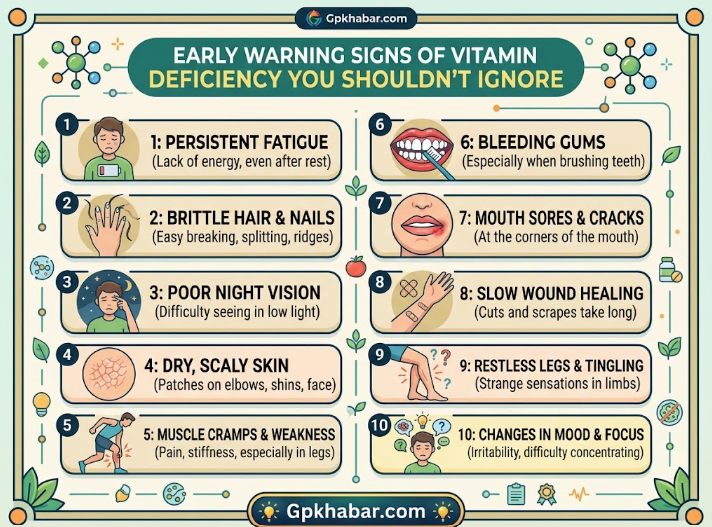
1. Persistent Fatigue and Low Energy
Feeling unusually tired is one of the most common symptoms people associate with nutritional deficiencies.
Several nutrients are involved in producing energy or maintaining healthy blood cells, including vitamin B12, folate, and vitamin B6.
Vitamin B12 deficiency, for example, can cause tiredness and weakness because it can contribute to a type of anemia. The National Institutes of Health also notes that vitamin B12 deficiency can affect the nervous system.
However, fatigue is extremely nonspecific.
If you’re regularly exhausted despite getting adequate sleep, don’t automatically assume you need a multivitamin. Persistent fatigue deserves a broader evaluation.
2. Pale or Unusually Light Skin
Changes in skin color can sometimes occur with certain nutritional deficiencies.
Vitamin B12 and folate deficiencies can contribute to megaloblastic anemia, which may cause weakness, tiredness, and pale skin.
Iron deficiency can also cause anemia, although iron is a mineral rather than a vitamin.
If you notice persistent paleness along with fatigue, shortness of breath, dizziness, or weakness, talk to a healthcare professional. A blood test may be needed to determine the cause.
3. Frequent Mouth Sores or Cracks Around the Lips
Changes around the mouth can sometimes be associated with nutritional deficiencies.
Deficiencies involving B vitamins, iron, and other nutrients may contribute to mouth or tongue changes.
For example, a smooth or sore tongue can occur with vitamin B12 or folate deficiency.
Cracks at the corners of the mouth, known as angular cheilitis, can have several causes, including nutritional deficiencies, irritation, and infection.
Because these symptoms aren’t specific to one vitamin, persistent mouth problems should be evaluated rather than treated with multiple supplements at once.
4. Numbness or Tingling in the Hands and Feet
Numbness, tingling, or a “pins and needles” sensation can have many causes.
One important nutritional cause is vitamin B12 deficiency. B12 is essential for normal neurological function, and prolonged deficiency can damage nerves.
The NIH states that neurological symptoms associated with B12 deficiency can occur even without anemia.
Other possible causes include diabetes, nerve compression, certain medications, alcohol-related nerve damage, and other neurological conditions.
If numbness or tingling is persistent, worsening, or accompanied by weakness or difficulty walking, seek medical evaluation.
5. Hair Loss or Changes in Hair
Hair loss is often blamed on vitamin deficiencies, but the relationship is more complicated.
Hair growth requires adequate nutrition, and deficiencies in certain nutrients can contribute to hair changes. However, hair loss can also result from genetics, hormonal changes, illness, stress, thyroid disorders, medications, and other factors.
For this reason, taking large amounts of “hair vitamins” isn’t necessarily the answer.
If hair loss is sudden, extensive, or accompanied by other symptoms, a healthcare professional can help determine the underlying cause.
6. Muscle Weakness or Bone Problems
Vitamin D plays an important role in calcium absorption and bone health.
Severe vitamin D deficiency can cause problems with bone mineralization and muscle function.
People at increased risk of vitamin D deficiency can include those with limited sun exposure, certain medical conditions affecting absorption, and some other risk factors.
However, simply having muscle aches or weakness doesn’t prove that you have low vitamin D.
A healthcare professional can determine whether testing is appropriate based on your symptoms and risk factors.
7. Poor Night Vision or Difficulty Seeing in Low Light
Vitamin A is important for normal vision.
Severe vitamin A deficiency can impair the ability to see in low-light conditions and, in serious cases, can cause significant eye problems.
Vitamin A deficiency is more common in certain populations and regions where access to vitamin-A-rich foods is limited.
Good food sources include foods such as:
- Eggs
- Dairy products
- Leafy green vegetables
- Orange and yellow vegetables
- Certain fruits
- Liver
Because excessive vitamin A intake can also be harmful, high-dose vitamin A supplements should not be taken casually.
8. Slow Wound Healing or Easy Bruising
Vitamin C plays an important role in collagen production and connective tissue.
Severe vitamin C deficiency can cause scurvy, which may involve swollen or bleeding gums, poor wound healing, bruising, and weakness.
Most people can obtain adequate vitamin C from a varied diet that includes fruits and vegetables.
Good sources include:
- Oranges and other citrus fruits
- Guava
- Kiwi
- Strawberries
- Bell peppers
- Broccoli
- Tomatoes
If you’re experiencing unexplained bruising or wounds that don’t heal normally, however, don’t assume that vitamin C is the cause. Several medical conditions and medications can produce similar symptoms.
9. Changes in Your Tongue or Taste
A sore, swollen, unusually smooth, or inflamed tongue can sometimes be associated with nutritional deficiencies.
Vitamin B12 and folate deficiencies are among the nutritional problems that can produce changes in the mouth and tongue.
Iron deficiency can also cause oral changes.
Persistent changes in taste can have many other causes, including infections, medications, dental problems, and neurological conditions.
If symptoms persist, a healthcare professional can help determine whether nutritional testing is appropriate.
10. Weak or Brittle Bones
Bone health depends on more than one nutrient.
Vitamin D helps the body absorb calcium, while other nutrients—including vitamin K, phosphorus, magnesium, and protein—also contribute to maintaining healthy bones.
Long-term vitamin D deficiency can impair bone mineralization.
Adults also become more vulnerable to bone loss as they age, making adequate nutrition, physical activity, and appropriate medical screening important components of bone health.
If you’re at increased risk of osteoporosis or fractures, talk to your healthcare professional about an appropriate prevention and screening plan.
Common Vitamin Deficiencies to Know About
Different vitamin deficiencies produce different symptoms, and some deficiencies may initially cause few obvious symptoms.
Vitamin B12
Vitamin B12 supports red blood cell formation and normal nervous system function.
A deficiency may cause:
- Fatigue
- Weakness
- Pale skin
- Numbness or tingling
- Balance problems
- Cognitive or neurological changes
People who follow a strict vegan diet may have a higher risk because naturally occurring vitamin B12 is found primarily in animal-derived foods. Fortified foods and supplements can provide B12.
Some digestive conditions and medications can also interfere with B12 absorption.
Folate
Folate is important for DNA synthesis and cell division.
Low folate can contribute to megaloblastic anemia, resulting in fatigue and weakness.
Folate is naturally found in foods such as leafy green vegetables, beans, peas, oranges, and other foods. Many countries also fortify certain grain products with folic acid.
People who could become pregnant are generally advised to obtain adequate folic acid because it helps reduce the risk of certain neural tube defects during early pregnancy.
Vitamin D
Vitamin D is important for bone health, muscle function, and other biological processes.
The body can produce vitamin D after exposure to sunlight, and it is also available from certain foods and supplements.
Vitamin D deficiency is more likely in some populations, including people with limited sun exposure and certain medical conditions.
Vitamin C
Vitamin C is an antioxidant and is required for collagen production and wound healing.
Severe deficiency can cause scurvy.
Fresh fruits and vegetables are generally excellent sources.
Vitamin A
Vitamin A is important for vision, immune function, and normal development.
Severe deficiency can cause vision problems, particularly difficulty seeing in low light.
However, excessive intake of preformed vitamin A from supplements can also be harmful, so more is not necessarily better.
Who Is More at Risk of Vitamin Deficiency?
Anyone can develop a nutrient deficiency, but some people may have a higher risk.
Potential risk factors include:
- Highly restrictive diets
- Very limited food variety
- Certain gastrointestinal conditions
- Problems with nutrient absorption
- Some medications
- Pregnancy
- Older age
- Heavy alcohol use
- Certain medical conditions
- Limited exposure to sunlight in the case of vitamin D
Risk varies considerably depending on the specific vitamin and individual circumstances.
Should You Take a Multivitamin?
A multivitamin can be useful for some people, but it isn’t a substitute for a balanced diet.
The right supplement depends on your age, diet, health status, medications, and nutritional needs.
Taking high doses of individual vitamins without medical guidance can sometimes be harmful. Vitamins that are stored in body fat—such as vitamins A, D, E, and K—can accumulate in the body.
If you suspect a deficiency, testing and professional advice are usually more useful than guessing based on symptoms.
How to Prevent Vitamin Deficiencies Naturally
For most people, the best foundation is a varied diet.
Try to include:
- A variety of colorful vegetables
- Fresh or frozen fruits
- Beans and lentils
- Whole grains
- Nuts and seeds
- Eggs, dairy, fish, meat, or appropriate fortified alternatives
- Healthy sources of fats
Instead of focusing on one “superfood,” aim for variety across the week.
If you follow a vegetarian or vegan diet, have food allergies, are pregnant, or have a medical condition that affects nutrient absorption, you may need more specific nutritional planning.
When Should You See a Doctor?
Don’t ignore persistent or unexplained symptoms simply because you suspect a vitamin deficiency.
Contact a healthcare professional if you experience ongoing:
- Severe fatigue
- Unexplained weight loss
- Persistent numbness or tingling
- Significant weakness
- Recurrent mouth problems
- Vision changes
- Unusual bruising
- Changes in bowel habits
- Bone pain or repeated fractures
Depending on your symptoms, a clinician may recommend blood tests or other investigations.
The goal should be to identify the underlying cause—not simply to treat a suspected deficiency without confirmation.
Frequently Asked Questions
What are the most common signs of vitamin deficiency?
Common symptoms can include fatigue, weakness, changes in the skin or mouth, hair changes, numbness or tingling, and changes in vision. However, these symptoms have many possible causes and don’t automatically indicate a deficiency.
How can I know if I have a vitamin deficiency?
A healthcare professional can assess your diet, symptoms, medical history, medications, and risk factors. Blood tests may be recommended when appropriate.
Can vitamin deficiency cause tiredness?
Yes. Certain deficiencies, including vitamin B12 and folate deficiency, can contribute to anemia and fatigue. However, tiredness has many other possible causes.
Which vitamin deficiency causes hair loss?
Several nutritional deficiencies have been associated with hair changes, but hair loss is not specific to any one vitamin. Genetics, hormones, illness, stress, thyroid disorders, and other factors can also contribute.
Can vitamin B12 deficiency cause numbness?
Yes. Vitamin B12 deficiency can affect the nervous system and cause numbness, tingling, balance problems, and other neurological symptoms.
Can I treat vitamin deficiency with food?
Many nutritional deficiencies can be prevented or improved by consuming adequate amounts of nutrient-rich foods. However, some people need supplements because of medical conditions, dietary restrictions, pregnancy, or problems absorbing nutrients.
Is it safe to take vitamins every day?
Some vitamins are safe at recommended amounts, but high doses can be harmful. The appropriate dose depends on the nutrient and the individual. Avoid taking high-dose supplements without appropriate medical advice.
Final Thoughts
Vitamin deficiencies can sometimes produce noticeable warning signs, but symptoms alone rarely tell the whole story.
Fatigue, hair loss, mouth changes, numbness, muscle weakness, and other symptoms can result from numerous conditions. Instead of assuming that a symptom means you need a particular supplement, consider your overall diet and discuss persistent or unexplained symptoms with a healthcare professional.
The simplest long-term strategy is usually a varied, nutrient-rich diet combined with healthy lifestyle habits. When a deficiency is suspected, proper evaluation can help determine what your body actually needs.