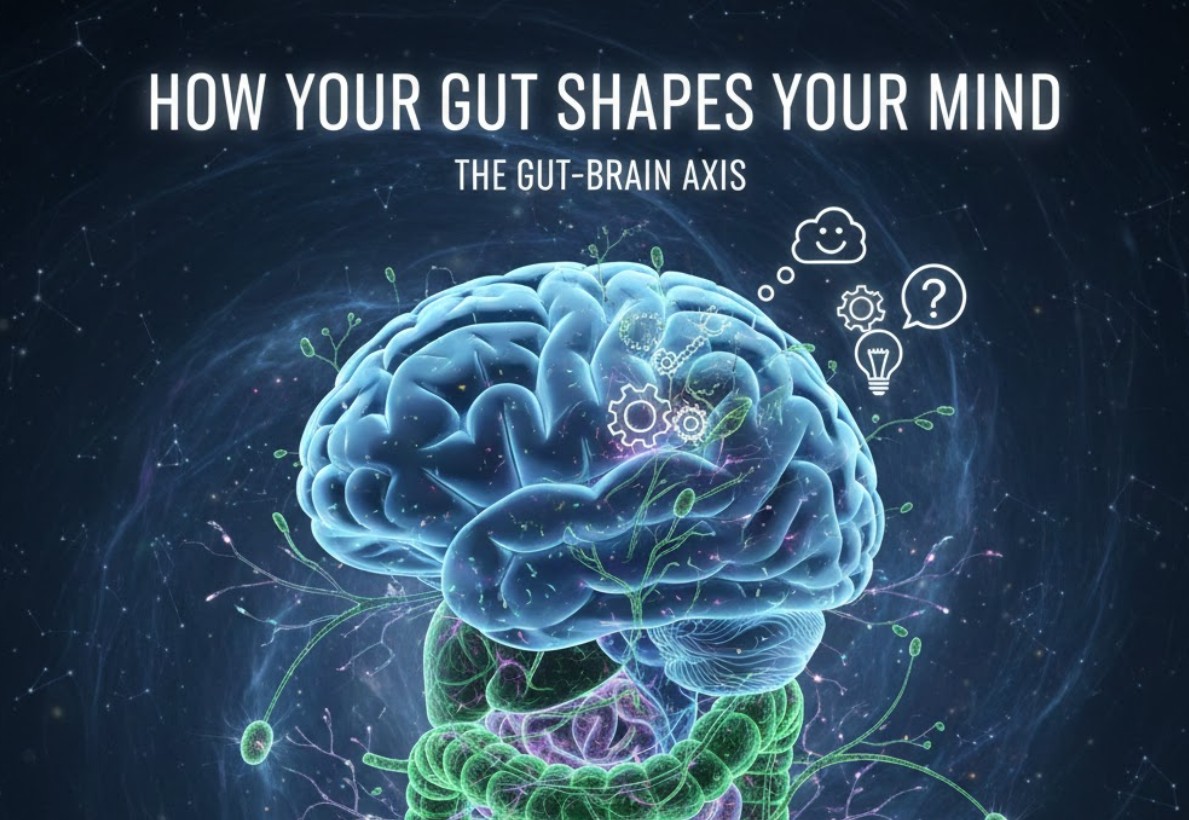
The “Psychobiotic” Revolution: How Your Gut Shapes Your Mind
For centuries, the prevailing view in medicine was a clear separation between the body and the mind, with the brain as the undisputed control center of our thoughts and emotions. Today, a paradigm-shifting field—the study of gut health—is challenging this long-held belief, revealing an intimate and bidirectional conversation between our digestive system and our central nervous system.
This revelation has ushered in the “Psychobiotic Revolution,” a new frontier in health that posits a significant portion of our mental well-being is dictated not just by our brains, but by the trillions of microbes living in our gut.
The Invisible World of the Microbiome
Our gut is home to a vast and diverse ecosystem known as the gut microbiome, comprising bacteria, viruses, fungi, and other microorganisms. This collection of life weighs a few pounds and, astonishingly, contains more cells than the rest of our body combined. Historically, these microbes were viewed primarily through the lens of digestion. However, modern science now recognizes them as a critical, metabolic organ that influences everything from nutrient absorption and immune function to—most profoundly—our mental health.
A diverse and balanced microbiome is crucial for overall health. When this balance is disrupted, a condition known as dysbiosis, it has been linked to a cascade of physical ailments, including irritable bowel syndrome (IBS), obesity, and inflammatory disorders. More recently, researchers have discovered a troubling correlation between dysbiosis and neurological and psychiatric conditions, including anxiety, depression, and even neurodevelopmental disorders like autism. This connection is not merely anecdotal; it is rooted in a complex anatomical and biochemical structure: the gut-brain axis.
The Gut-Brain Axis: A Two-Way Street
The gut-brain axis is the comprehensive communication network that connects the emotional and cognitive centers of the brain with peripheral gut function. It is the anatomical basis for the common phrase, “having a gut feeling.” This axis involves several pathways, ensuring constant communication:
-
The Vagus Nerve: This is the longest nerve in the autonomic nervous system and serves as the primary, physical highway between the gut and the brain. It transmits signals in both directions, allowing the brain to influence digestion and the gut to send signals that impact mood.
-
Neurotransmitters and Metabolites: Gut microbes are biochemical powerhouses. They produce and influence levels of key neurotransmitters—chemical messengers that regulate mood and behavior—such as serotonin, GABA (gamma-aminobutyric acid), and dopamine. For instance, an estimated 90% of the body’s serotonin, a key regulator of mood and happiness, is produced in the gut. Microbes also ferment dietary fiber to produce Short-Chain Fatty Acids (SCFAs) like butyrate, which can cross the blood-brain barrier to directly nourish brain cells and regulate the production of Brain-Derived Neurotrophic Factor (BDNF), a protein essential for nerve growth and cognitive function.
-
The Immune System: The gut houses about 70-80% of the body’s immune cells. A compromised gut lining can lead to increased inflammation in the body. Since chronic inflammation is a known contributor to mood disorders like depression, the gut’s ability to modulate the inflammatory response is a direct line to mental health.
Defining the Psychobiotic
The term “psychobiotic” was coined in 2013 by researchers John F. Cryan and Ted Dinan to describe a new, exciting class of live organisms (probiotics) that, when ingested in adequate amounts, produce a health benefit in patients suffering from psychiatric conditions.
Unlike general probiotics, which aim to improve digestion or immunity, psychobiotics specifically target the gut-brain axis to modulate mental health outcomes. They work by:
-
Producing Neurotransmitters: Certain psychobiotic strains, such as Lactobacillus and Bifidobacterium, are known to produce neurotransmitters like GABA.
-
Reducing Cortisol: Some strains have been shown to regulate the hypothalamic-pituitary-adrenal (HPA) axis, the body’s central stress-response system, thereby lowering levels of the stress hormone cortisol.
-
Combating Inflammation: By strengthening the gut barrier and influencing the immune system, psychobiotics can reduce systemic inflammation that contributes to mood disorders.
Leading Psychobiotic Strains
While research is ongoing, specific strains have emerged in clinical studies for their potential psychoactive benefits:
-
Lactobacillus rhamnosus (JB-1): Demonstrated anti-anxiety and anti-depressant effects in animal models, acting primarily via the vagus nerve.
-
Bifidobacterium longum (1714): Shown to reduce daily stress and improve memory in healthy volunteers.
-
Lactobacillus helveticus and Bifidobacterium longum Cocktails: Studies indicate these combinations can reduce stress-induced cortisol levels and improve anxiety scores.
It’s crucial to understand that the benefits are strain-specific. Not all probiotics are psychobiotics, and not all psychobiotics work for all conditions. This is a field that requires precision.
The Dietary Path to Mental Wellness
The psychobiotic revolution isn’t just about supplements; it’s about rethinking diet as a primary tool for mental health. What we eat feeds our microbes, and in turn, those microbes shape our minds. This shift encourages a focus on Prebiotics and Fermented Foods.
Prebiotics: Fuel for Friendly Flora
Prebiotics are non-digestible food ingredients, primarily types of fiber, that selectively stimulate the growth and activity of beneficial gut bacteria, including psychobiotics. Think of them as the fertilizer for your microbiome garden. Excellent sources of prebiotics include:
-
Fructans: Found in garlic, onions, leeks, bananas, and asparagus.
-
Galactooligosaccharides (GOS): Found in legumes.
-
Resistant Starch: Found in cooled cooked potatoes and rice, green bananas, and oats.
Fermented Foods: Natural Psychobiotics
Certain fermented foods are naturally rich sources of various probiotic and, potentially, psychobiotic organisms. Incorporating them into the daily diet is a powerful lifestyle intervention:
-
Yogurt and Kefir: Choose plain, live-culture varieties.
-
Sauerkraut and Kimchi: Fermented cabbage products.
-
Kombucha: Fermented tea.
-
Tempeh and Miso: Fermented soybean products.
These foods not only introduce beneficial bacteria but also contain postbiotics (the metabolites produced by the bacteria, such as SCFAs) that contribute to health.
The Future of “Bottom-Up” Psychiatry
The psychobiotic revolution represents a fundamental shift in how we conceptualize and treat mental illness. Instead of a purely “top-down” approach focused solely on the brain (medication and psychotherapy), the new science advocates for a “bottom-up” strategy—treating the gut to heal the mind.
The immediate promise lies in precision medicine. Researchers envision a future where a stool sample could reveal a microbial signature indicative of a person’s risk for anxiety or depression. Treatment would then involve a personalized blend of specific psychobiotic strains, prebiotics, and dietary modifications designed to correct the microbial imbalance.
While the potential is enormous—offering a complementary, low-stigma, and potentially side-effect-reduced approach to mental healthcare—it is still an emerging field. Rigorous, large-scale clinical trials are required to confirm the efficacy of specific psychobiotic strains across diverse populations and conditions.
Nonetheless, the psychobiotic revolution is already changing public health discourse. It empowers individuals to take charge of their mental wellness through dietary and lifestyle choices, recognizing that the humble gut is, in fact, our second brain, and a partner in achieving holistic health. The path to a happier, healthier mind may very well begin with tending to the trillions of tiny tenants within our digestive tract