Essential Health Benefits (EHB): Your Guide to Mandatory Health Coverage
The landscape of health insurance can be complex, but at its foundation, it is built upon a crucial set of requirements designed to ensure comprehensive and accessible care for millions of Americans: the Essential Health Benefits (EHB).
Established as a core component of the Affordable Care Act (ACA), the EHB mandate defines a standard package of services that most individual and small-group health insurance plans must cover. Before the ACA, many plans could exclude critical services like maternity care or prescription drugs, leaving consumers vulnerable to catastrophic financial costs. The EHB changed this, setting a federal minimum standard for health insurance coverage.
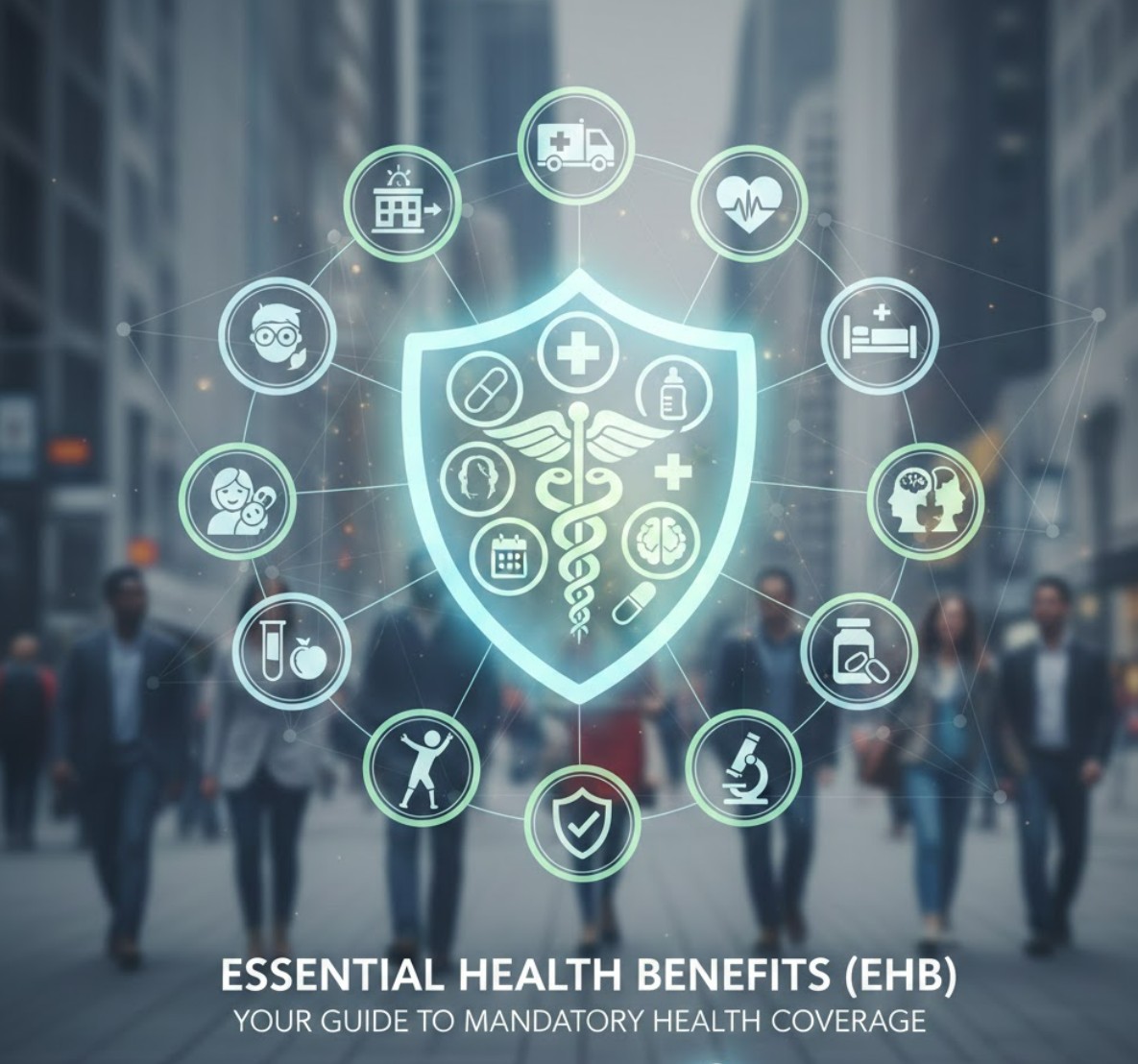
This in-depth guide will break down the history, requirements, and the specific 10 essential health benefits that must be included in coverage, helping you understand what your health plan is legally required to provide.
What Are Essential Health Benefits (EHB)?
Essential Health Benefits (EHB) are a set of 10 distinct categories of healthcare services that certain health insurance plans are required to cover.3 The primary goal of the EHB is to prevent health plans from excluding crucial services and to guarantee that consumers have access to a baseline of comprehensive medical care.
Who Must Cover the EHB?
The EHB requirements apply to:
-
Individual Market Plans: Health insurance purchased by individuals (on and off the Health Insurance Marketplace, or “Obamacare” exchange).
-
Small Group Plans: Health insurance offered by small employers (generally those with 50 or fewer employees).
-
Medicaid Expansion Programs: State-specific Medicaid programs for the expanded eligibility population.
Who is Exempt?
Not all health plans are required to cover the EHB. Key exemptions include:
-
Large Group Plans: Health insurance offered by large employers (often 51 or more employees).
-
Self-Insured Plans: Plans where the employer assumes the financial risk for providing health care benefits to its employees.
-
“Grandfathered” Plans: Plans that existed before the ACA was signed into law (March 23, 2010) and have not substantially changed since then.
-
Short-Term, Limited-Duration Insurance (STLDI): Temporary health plans that are exempt from many ACA rules, including EHB.
The 10 Essential Health Benefits Explained
The Affordable Care Act mandates that all applicable health plans must cover services within the following 10 categories. While the federal law sets the categories, the specific details—such as the number of covered visits or specific prescription drugs—are often determined by a state-selected benchmark plan, which reflects the scope of benefits typically provided by a standard employer plan in that state.
Here is a detailed breakdown of the 10 mandated categories:
1. Ambulatory Patient Services (Outpatient Care)
This category covers care received without being admitted to a hospital. It is commonly known as outpatient care and includes the most frequent types of healthcare services.
-
What’s Covered: Visits to your primary care doctor, specialist visits, outpatient surgery center services, and care received at a clinic.
2. Emergency Services
Health plans must cover emergency room (ER) services. A crucial protection here is that plans cannot charge you more for getting emergency care from an out-of-network hospital or provider than they would for an in-network provider. They also cannot require pre-authorization for emergency treatment.
-
What’s Covered: Emergency room visits, evaluations, and treatment for conditions that could result in serious disability or death if not treated immediately.
3. Hospitalization (Inpatient Care)
This covers all necessary care received when you are formally admitted to a hospital for an overnight stay or longer.
-
What’s Covered: Inpatient hospital stays, surgeries, medically necessary room and board, and related services, such as lab work and medications received during the stay.
4. Maternity and Newborn Care
This benefit ensures that pregnancy, childbirth, and newborn care are not treated as pre-existing conditions and must be covered. Before the ACA, maternity coverage was often an expensive add-on or simply excluded from many individual plans.
-
What’s Covered: Prenatal care, labor and delivery, and post-delivery care for both the mother and the newborn.
5. Mental Health and Substance Use Disorder Services
This category is critical for ensuring comprehensive behavioral health coverage. A core federal regulation, the Mental Health Parity and Addiction Equity Act (MHPAEA), is enforced through the EHB requirement.
-
What’s Covered: Inpatient and outpatient mental health care (e.g., counseling, psychotherapy) and treatment for substance use disorders.
-
Key Requirement: Coverage for mental health and substance use disorder services must be comparable to—or have “parity” with—coverage for medical and surgical services in terms of copayments, deductibles, and treatment limits.
6. Prescription Drugs
Plans must cover prescription medications. To ensure broad access, plans must cover at least one drug in every category and class of drugs recognized by the U.S. Pharmacopeia.
-
What’s Covered: Medications prescribed by a licensed healthcare provider. Plans use a formulary (a list of covered drugs) that categorizes drugs into tiers (e.g., generic, preferred brand, non-preferred) that determine your out-of-pocket cost.
7. Rehabilitative and Habilitative Services and Devices
This category covers therapy and devices that help a person recover from a medical event (rehabilitative) or services that help a person acquire, maintain, or improve skills for daily functioning (habilitative).
-
What’s Covered: Physical therapy, occupational therapy, speech-language pathology, psychiatric rehabilitation, and related devices. Habilitative services are particularly important for children with developmental disorders.
8. Laboratory Services
This includes all lab work, tests, and screenings used to help a doctor diagnose a condition, monitor a health status, or measure the effectiveness of treatment.34
-
What’s Covered: Blood tests, diagnostic tests, screenings, and lab work.
9. Preventive and Wellness Services and Chronic Disease Management
This is one of the most significant and cost-saving aspects of the EHB. Certain preventive services must be provided at 100% coverage with no cost-sharing (no copayment, coinsurance, or deductible), even if you haven’t met your annual deductible.
-
What’s Covered (at no cost): Routine check-ups, certain immunizations (like flu shots), screenings (such as mammograms and colonoscopies), and contraception.
-
Also Included: Services for managing chronic conditions like diabetes or hypertension.
10. Pediatric Services (Including Oral and Vision Care)
This benefit ensures that children receive essential coverage for all the other nine categories, plus mandated dental and vision coverage.
-
What’s Covered: Well-child visits, immunizations, and essential vision and dental care for children up to age 19.
-
Note: While pediatric dental and vision are essential, adult dental and vision coverage are generally not considered EHB and are often sold separately.
EHB and Metal Tier Health Plans
When shopping on the Health Insurance Marketplace, you will notice plans categorized by “metal levels”: Bronze, Silver, Gold, and Platinum. It is a common misconception that the metal levels offer different benefits.
Crucially, every single plan—regardless of its metal level—must cover all 10 Essential Health Benefits.
The metal level simply signifies the actuarial value—how the costs are split between the insurer and the policyholder when a benefit is used:
| Metal Tier | Actuarial Value (Plan Pays) | Your Responsibility (Average) | Monthly Premium | Best For |
| Platinum | 90% | 10% | Highest | High healthcare use, wanting lowest out-of-pocket costs. |
| Gold | 80% | 20% | High | Frequent healthcare use, wanting moderate out-of-pocket costs. |
| Silver | 70% | 30% | Moderate | Balancing premium and out-of-pocket costs, required for Cost-Sharing Reductions (CSRs). |
| Bronze | 60% | 40% | Lowest | Young and healthy, wanting lowest premium, prepared for high out-of-pocket costs. |
The EHB ensures that the services are the same across all tiers, but the metal level determines how much you pay (deductibles, copays, coinsurance) for those services.
Conclusion: Securing Comprehensive Coverage
The Essential Health Benefits are a cornerstone of modern healthcare access, ensuring that millions of Americans in the individual and small-group markets are protected from inadequate “junk” plans that exclude vital services. By mandating coverage across 10 core categories—from hospitalization and emergency care to mental health, maternity, and preventive services—the EHB provides a necessary standard of comprehensive care.
Understanding these mandatory benefits empowers you as a consumer to evaluate health plans effectively, ensuring you select a policy that not only meets your budget but also provides the robust, essential coverage you need for long-term health and financial security.