Hormonal Imbalance in Women: Signs, Causes, and Natural Ways to Restore Balance
Think of your hormones as a finely tuned orchestra. When every instrument—estrogen, progesterone, thyroid, cortisol, and insulin—plays in perfect harmony, you feel energetic, vibrant, and emotionally balanced.
But if even one instrument goes out of tune, the entire melody breaks down.
Hormones are your body’s chemical messengers. They travel through your bloodstream, telling your tissues and organs what to do. They control everything from your metabolism, sleep cycles, and body temperature to your mood, libido, and menstrual cycle.
When you experience a hormonal imbalance, it means your body has too much or too little of a specific hormone. Even tiny shifts can cause significant changes in your physical and mental well-being.
Here is a guide to help you recognize the signs of a hormonal imbalance, understand what causes it, and discover practical, natural ways to restore harmony to your body.
5 Signs of Hormonal Imbalance in Women
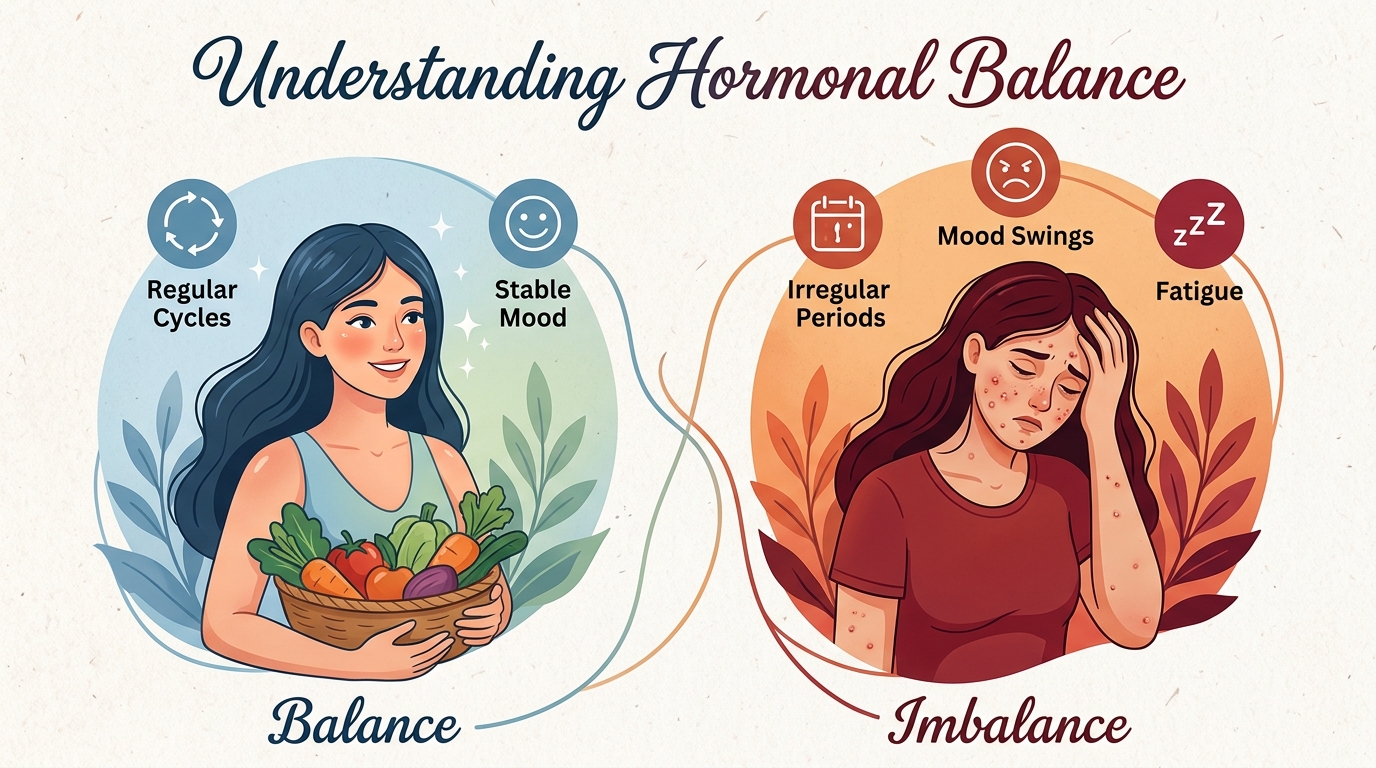
Hormonal imbalances often hide behind common, everyday complaints. If you are experiencing several of the following symptoms consistently, your hormones might be trying to tell you something:
1. Irregular or Painful Periods
This is the most classic sign of a hormonal imbalance. A normal menstrual cycle ranges from 21 to 35 days. If your periods are consistently late, early, completely missed, or accompanied by debilitating cramps and heavy bleeding, it often points to an imbalance between estrogen and progesterone.
2. Stubborn Weight Gain (Especially Around the Belly)
Have you noticed your weight creeping up even though your diet and exercise habits haven’t changed? High levels of cortisol (the stress hormone) or insulin resistance make your body hold onto fat, particularly in the abdominal area. An underactive thyroid (hypothyroidism) can also slow down your metabolism, making weight loss feel nearly impossible.
3. Constant Fatigue and Brain Fog
If you wake up feeling exhausted despite sleeping 8 hours, your hormones may be depleted. Chronic fatigue is closely linked to low thyroid hormones, high cortisol, or low progesterone (which helps you fall into a deep, restful sleep).
4. Adult Acne and Thinning Hair
While we associate acne with teenage years, hormonal fluctuations in adulthood can trigger painful, cystic breakouts—typically along the jawline, chin, and neck. This is often caused by an excess of androgens (male hormones like testosterone that women also produce). High androgens can also cause the hair on your head to thin out while promoting unwanted hair growth on the face.
5. Sudden Mood Swings and Anxiety
Do you feel fine one minute and completely overwhelmed or angry the next? Estrogen has a direct impact on neurotransmitters in your brain, including serotonin (the “happy” chemical). Rapid drops in estrogen—especially right before your period (PMS) or during perimenopause—can trigger sudden mood drops, anxiety, and irritability.
What Causes Hormones to Go Out of Sync?
Hormonal shifts are a natural part of life during puberty, pregnancy, postpartum, and menopause. However, when imbalances occur outside of these phases, they are usually driven by:
- Chronic Stress: When you are constantly stressed, your body prioritizes making cortisol over sex hormones like progesterone, leading to a state called “estrogen dominance.”
- Poor Gut Health: Your gut microbiome plays a massive role in regulating estrogen. A group of gut bacteria called the estrobolome helps clear out excess estrogen. If your gut is unhealthy, estrogen can get reabsorbed into your body.
- Polycystic Ovary Syndrome (PCOS): A common endocrine disorder where the ovaries produce abnormal amounts of androgens, disrupting ovulation.
How to Balance Hormones Naturally: 4 Science-Backed Steps
Medication is sometimes necessary, but many hormonal imbalances respond beautifully to lifestyle modifications. Here is how you can naturally support your endocrine system:
1. Eat Healthy Fats at Every Meal
Your body literally needs cholesterol and healthy fats to manufacture hormones. If you are on an ultra-low-fat diet, you might be starving your body of the building blocks it needs.
- What to eat: Focus on avocados, extra virgin olive oil, wild-caught fatty fish, walnuts, chia seeds, and pasture-raised eggs.
2. Try “Seed Cycling”
Seed cycling is a gentle, natural practice that supports estrogen production in the first half of your cycle and progesterone in the second half.
- Days 1 to 14 (Follicular Phase): Eat 1 tablespoon of raw, ground flaxseeds and pumpkin seeds daily to support healthy estrogen levels.
- Days 15 to 28 (Luteal Phase): Eat 1 tablespoon of raw, ground sesame seeds and sunflower seeds daily to support progesterone production.
3. Support Your Liver and Gut
Your liver is responsible for breaking down used hormones so they can be eliminated from your body. If your liver is sluggish or you are constipated, those excess hormones (especially estrogen) recirculate in your bloodstream.
- The Fix: Eat cruciferous vegetables (broccoli, cabbage, Brussels sprouts, kale) which contain a compound called DIM that helps the liver detoxify estrogen. Drink plenty of water and eat high-fiber foods to keep your digestion moving daily.
4. Practice “Stress-Reducing” Exercise
While exercise is great, high-intensity workouts (like heavy cardio or intense HIIT) when you are already exhausted can drive your cortisol levels even higher, worsening your hormonal issues.
- The Fix: Swap out some of your high-intensity workouts for cortisol-lowering activities like strength training, walking in nature, yoga, or Pilates.
Frequently Asked Questions (FAQs)
How do I know if my hormones are imbalanced?
The most accurate way to know is through blood, saliva, or urine tests ordered by a doctor. Common tests include checking your levels of Estrogen, Progesterone, Testosterone, DHEA, Cortisol, and a full Thyroid panel.
Does sugar affect female hormones?
Yes, dramatically. Eating excess sugar spikes your insulin levels. High insulin can signal your ovaries to produce more testosterone, which disrupts ovulation and leads to acne, irregular periods, and mood swings.
How long does it take to balance hormones naturally?
Because your cells and hormones operate on cycles, it typically takes 3 to 6 months of consistent dietary and lifestyle changes to see a significant improvement in your symptoms and cycle regularity.