How Much Sleep Do You Really Need? A Complete Guide by Age
Getting enough sleep is one of the simplest things you can do for your health, yet millions of people regularly sleep less than they need.
Work, school, family responsibilities, smartphones, stress, late-night entertainment, and irregular schedules can all push bedtime later. Some people even treat sleep as something they can sacrifice during busy periods and make up for later.
But sleep isn’t simply “downtime.” Your body and brain use sleep for important processes that support physical health, concentration, mood, memory, and everyday performance.
So, how much sleep do you really need?
The answer depends largely on your age, but there is also individual variation. For most adults, health organizations recommend getting at least seven hours of sleep regularly, while many adults function best with around seven to nine hours.
Here’s what you should know about sleep requirements at different stages of life and how to improve your sleep naturally.
Why Is Sleep So Important?
Sleep affects much more than whether you feel tired the next morning.
Adequate sleep helps support normal brain function, concentration, learning, memory, emotional well-being, and physical health.
When you consistently don’t get enough sleep, you may notice that it becomes harder to concentrate or stay alert during the day. Short sleep has also been associated with a range of health problems.
CDC research has found that adults sleeping less than seven hours were more likely to report difficulties with daily activities such as concentrating and remembering things.
Sleep also matters for safety. Fatigue can slow reaction time and impair judgment, which is particularly important when driving or operating machinery.
That doesn’t mean one short night automatically causes serious health problems. The bigger concern is regular or chronic insufficient sleep.
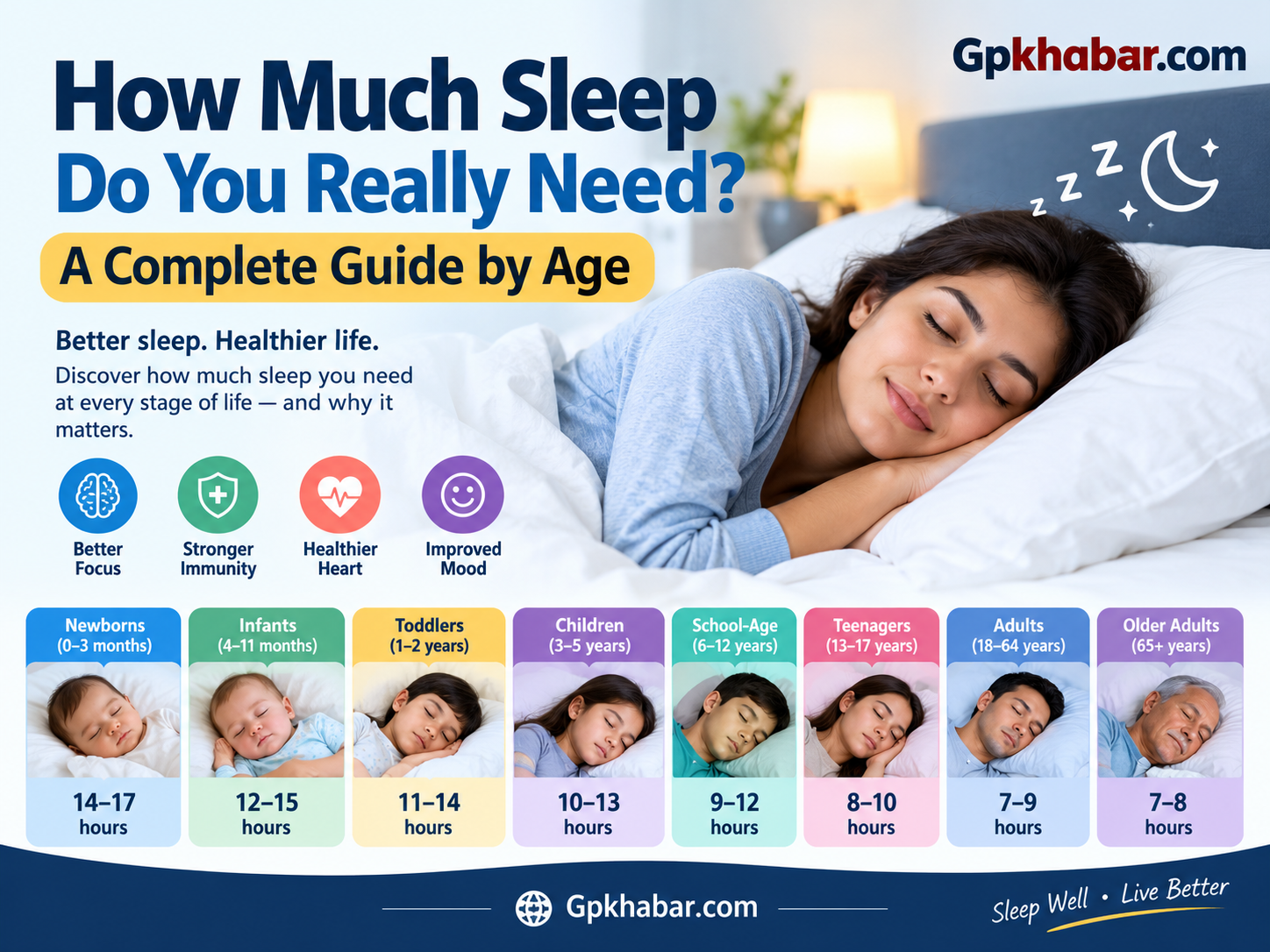
How Much Sleep Do You Need by Age?
Sleep requirements change throughout life.
General recommendations are:
| Age group | Recommended sleep |
|---|---|
| Newborns, 0–3 months | 14–17 hours |
| Infants, 4–12 months | 12–16 hours, including naps |
| Toddlers, 1–2 years | 11–14 hours, including naps |
| Preschool children, 3–5 years | 10–13 hours, including naps |
| School-age children, 6–12 years | 9–12 hours |
| Teenagers, 13–18 years | 8–10 hours |
| Adults, 18–60 years | At least 7 hours |
| Adults, 61–64 years | 7–9 hours |
| Adults, 65+ years | 7–8 hours |
These are general recommendations rather than a precise requirement for every individual. Sleep needs can vary from person to person.
For adults, CDC guidance recommends at least seven hours for people aged 18–60, while other CDC material describes most adults as needing roughly seven to nine hours.
Newborns: 14–17 Hours
Newborn babies sleep much more than adults.
During the first months of life, sleep is spread throughout the day and night rather than occurring in one long nighttime period.
Frequent waking is normal because babies need regular feeding and care.
Parents shouldn’t expect a newborn to follow an adult-style sleep schedule.
Infants: 12–16 Hours
Babies between four and 12 months generally need 12–16 hours of sleep in a 24-hour period, including naps.
As babies grow, nighttime sleep often becomes more consolidated, although individual patterns can vary significantly.
Parents should focus on safe sleep practices as well as adequate sleep duration.
Toddlers: 11–14 Hours
Children between one and two years old generally need 11–14 hours, including naps.
Toddlers are becoming increasingly active and independent, but they still require substantially more sleep than adults.
A consistent bedtime routine can help children transition from daytime activity to sleep.
Preschoolers: 10–13 Hours
Children ages three to five generally need 10–13 hours of sleep per day, including naps.
Some children may continue taking regular naps, while others gradually stop napping.
Maintaining a predictable bedtime and wake-up schedule can help support healthy sleep.
School-Age Children: 9–12 Hours
Children ages six to 12 generally need nine to 12 hours of sleep per day.
School, homework, sports, screen use, and social activities can all compete with bedtime.
Parents can help by establishing consistent sleep and wake times, including on weekends.
Teenagers: 8–10 Hours
Teenagers generally need eight to 10 hours of sleep per 24 hours.
However, getting enough sleep can be particularly challenging during adolescence.
Biological changes during puberty can shift the body’s internal clock, making many teenagers naturally feel sleepy later at night.
Early school schedules can then make it difficult for them to obtain the recommended amount of sleep.
Late-night phone use, homework, social activities, and caffeine can add to the problem.
Adults: At Least 7 Hours
For adults aged 18–60, the CDC recommends seven or more hours of sleep per night.
That doesn’t necessarily mean exactly seven hours is ideal for everyone.
Some adults may feel rested after around seven hours, while others need closer to eight or nine.
One useful way to think about the recommendation is that seven hours is a minimum target for many healthy adults rather than a universal maximum.
Older Adults: 7–9 Hours
Sleep requirements don’t suddenly disappear as people get older.
Adults in their 60s and beyond generally still need substantial amounts of sleep.
However, sleep patterns can change with age. Older adults may experience changes in sleep timing, wake more frequently during the night, or spend less time in certain stages of sleep.
If sleep problems become persistent or interfere with daytime functioning, it’s worth discussing them with a healthcare professional.
Is 6 Hours of Sleep Enough?
For most adults, regularly getting only six hours is less than recommended.
There are rare individuals who appear to function normally on unusually short sleep, but this is not typical.
CDC material notes that most adults need around seven to eight hours, with individual variation.
If you routinely sleep six hours and feel tired, irritable, unfocused, or dependent on caffeine to stay awake, your body may be telling you that you need more sleep.
Instead of asking, “Can I survive on six hours?” a better question is:
“Am I consistently getting enough sleep to feel rested and function normally during the day?”
Is More Sleep Always Better?
Not necessarily.
Getting enough sleep is important, but sleeping substantially longer than you need doesn’t automatically mean better health.
Long sleep can sometimes be associated with health problems, but this doesn’t necessarily mean sleeping longer directly causes those problems. Underlying illnesses, disrupted sleep, medications, and other factors can affect both sleep duration and health.
The goal is generally adequate, good-quality sleep, not simply maximizing the number of hours you spend in bed.
Signs You May Not Be Getting Enough Sleep
Your body can provide clues when you’re consistently short on sleep.
Possible signs include:
- Feeling tired shortly after waking
- Excessive daytime sleepiness
- Difficulty concentrating
- Forgetfulness
- Irritability
- Reduced motivation
- Slower reaction times
- Frequently relying on caffeine
- Falling asleep unintentionally during quiet activities
- Struggling to stay awake while driving
CDC information notes that insufficient sleep can affect concentration, memory, daily activities, and safety.
One bad night doesn’t necessarily mean you’re sleep deprived. Persistent patterns are more important.
Sleep Quantity vs. Sleep Quality
Getting eight hours in bed doesn’t always mean getting eight hours of good-quality sleep.
You may spend enough time in bed but still wake frequently throughout the night.
Possible reasons include:
- Stress
- Noise
- An uncomfortable bedroom
- Alcohol
- Caffeine
- Certain medications
- Sleep apnea
- Restless legs syndrome
- Chronic pain
- Irregular sleep schedules
This is why both sleep duration and sleep quality matter.
If you regularly wake feeling exhausted despite allowing enough time for sleep, the problem may not simply be that you need more hours.
10 Simple Ways to Sleep Better
1. Keep a Consistent Sleep Schedule
Try to go to bed and wake up at roughly the same time each day.
A consistent schedule helps establish a predictable rhythm.
2. Create a Relaxing Bedtime Routine
Give your brain time to transition from daytime activity to sleep.
Reading, taking a warm shower, gentle stretching, or quiet music may help you wind down.
3. Reduce Bright Screens Before Bed
Phones, tablets, computers, and televisions can encourage late-night activity and make it easier to postpone bedtime.
Consider putting devices aside before you intend to sleep.
4. Watch Your Caffeine Intake
Caffeine can remain active in the body for hours.
If you have trouble falling asleep, consider reducing caffeine later in the day.
Remember that coffee isn’t the only source. Tea, energy drinks, cola, chocolate, and some medications can also contain caffeine.
5. Make Your Bedroom Comfortable
A quiet, dark, comfortable sleeping environment can make it easier to sleep.
Consider temperature, lighting, noise, and mattress comfort.
6. Exercise During the Day
Regular physical activity can support overall health and healthy sleep patterns.
Walking, cycling, swimming, strength training, or another activity you enjoy can all be useful.
If intense exercise close to bedtime makes it harder for you to sleep, move your workout earlier.
7. Don’t Use Alcohol as a Sleep Solution
Alcohol may make some people feel sleepy initially, but it can disrupt sleep later in the night.
Using alcohol regularly as a way to fall asleep can create additional problems.
8. Get Natural Light During the Day
Exposure to daylight helps regulate the body’s internal clock.
Getting outside during the day, particularly in the morning, can be a simple addition to a healthy sleep routine.
9. Avoid Very Heavy Meals Close to Bedtime
Large or uncomfortable meals shortly before lying down may interfere with sleep for some people.
If you’re hungry before bed, a small snack may be more comfortable than going to bed extremely hungry.
10. Give Yourself Enough Time in Bed
This may sound obvious, but it’s one of the most important steps.
If you need eight hours of sleep but routinely allow only six hours between bedtime and your alarm, sleep hygiene alone cannot solve the problem.
Sometimes the solution is simply making sleep a higher priority.
What Happens When You Regularly Sleep Too Little?
Consistently getting insufficient sleep can affect daytime functioning and overall health.
Short sleep has been associated with increased risk of several health problems, including obesity, diabetes, high blood pressure, cardiovascular disease, stroke, and mental distress.
Insufficient sleep can also affect reaction time and decision-making.
For drivers, this is particularly important. CDC guidance notes that fatigue can cause slower reactions, poor decisions, lane drifting, and brief unintended sleep episodes.
If you’re extremely sleepy, don’t drive simply because you believe you can “push through” the fatigue.
Can You Catch Up on Sleep?
Sleeping longer after several short nights may help reduce some immediate sleepiness, but it shouldn’t be viewed as a complete replacement for consistent sleep.
For example, sleeping five hours every weekday and then spending most of the weekend in bed isn’t an ideal long-term strategy.
A more sustainable approach is to build adequate sleep into your regular schedule.
If you repeatedly struggle to obtain enough sleep because of work, caregiving, school, or another ongoing responsibility, consider whether changes to your schedule or professional support could help.
When Should You Talk to a Doctor?
Occasional poor sleep is common.
However, talk to a healthcare professional if you regularly:
- Have trouble falling asleep
- Wake repeatedly during the night
- Wake too early and cannot return to sleep
- Feel exhausted despite getting enough time in bed
- Snore loudly
- Wake up gasping or choking
- Experience severe daytime sleepiness
- Fall asleep unintentionally during the day
These symptoms can sometimes indicate an underlying sleep disorder.
Don’t assume that chronic poor sleep is simply something you have to live with.
Frequently Asked Questions
How many hours of sleep does an adult need?
Most adults need at least seven hours of sleep regularly. Many adults need around seven to nine hours, although individual sleep requirements vary.
Is 5 hours of sleep enough?
For most adults, five hours is below the recommended amount. Regularly sleeping that little can contribute to daytime sleepiness and impaired concentration.
Is 6 hours of sleep enough?
Six hours is below the recommended minimum for most adults. Some rare individuals naturally need less sleep, but this is not typical.
Is 8 hours of sleep good?
For many adults, eight hours falls comfortably within the commonly recommended range. However, sleep quality and individual needs also matter.
How much sleep does a teenager need?
Teenagers ages 13–18 generally need eight to 10 hours of sleep per 24 hours.
How much sleep do children need?
Sleep needs vary by age. Younger children need substantially more sleep than adults, with recommendations ranging from about 10–13 hours for preschoolers to nine–12 hours for school-age children.
Why am I tired after 8 hours of sleep?
Sleep duration isn’t the only factor. Poor sleep quality, frequent nighttime awakenings, stress, medications, irregular schedules, and sleep disorders can all contribute to daytime fatigue.
Can you sleep too much?
Yes. Regularly sleeping much longer than usual can sometimes be associated with underlying health problems. If you consistently need unusually long sleep and still feel tired, discuss it with a healthcare professional.
Final Thoughts
There isn’t one perfect number of sleep hours that applies to everyone.
Age is an important factor, but individual needs and sleep quality also matter. For most adults, regularly getting at least seven hours is a useful evidence-based target, while many adults need closer to seven to nine hours to feel rested and function well.
Rather than treating sleep as time that can always be sacrificed, consider it part of your basic health routine.
A consistent schedule, comfortable sleep environment, daytime activity, sensible caffeine habits, and enough time in bed can all help.
And if you consistently sleep enough but still feel exhausted, don’t simply assume you need more hours. Persistent sleep problems deserve attention because an underlying sleep disorder or another health issue may be involved.