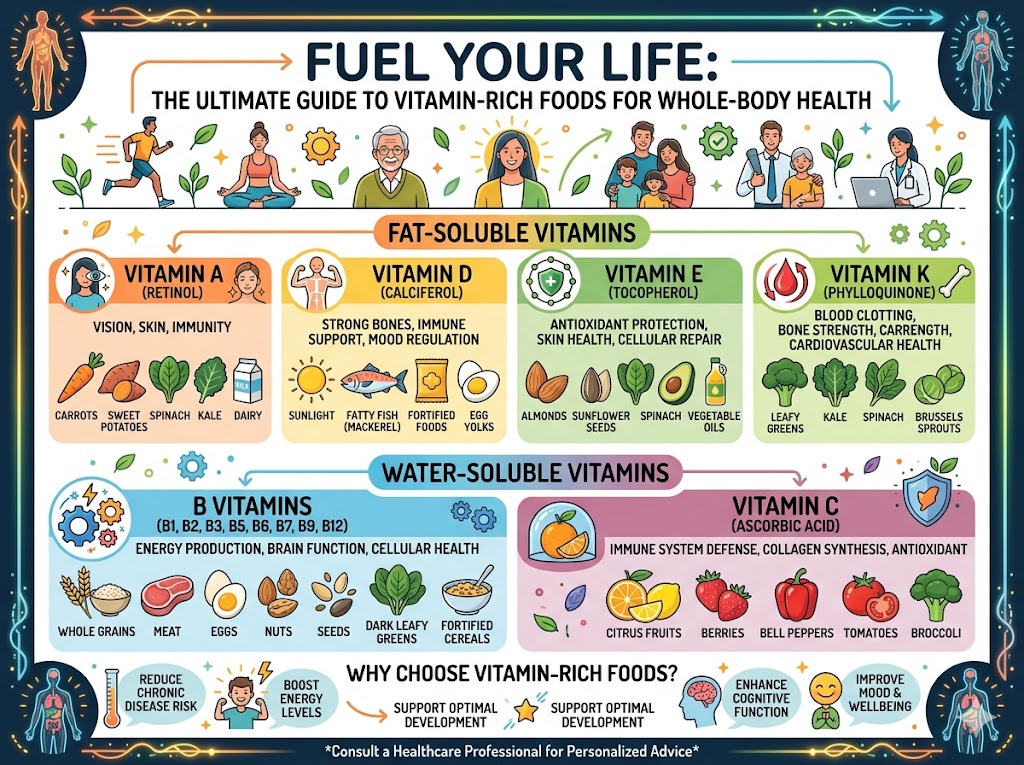
Fuel Your Life: The Ultimate Guide to Vitamin-Rich Foods for Whole-Body Health
In an era of “hustle culture” and processed convenience, we often overlook the most potent medicine available to us: our food. True vitality isn’t found in a third cup of coffee or a quick-fix energy drink; it’s stored in the complex micronutrients found in whole foods.
Optimizing your diet for specific vitamins can revolutionize your energy levels, skin radiance, cognitive function, and cardiovascular longevity. Here is your comprehensive guide to the top vitamin-rich foods designed to help you look, feel, and think your best.
1. Energy: Beyond the Caffeine Crash
To maintain consistent energy, your body requires B-vitamins (specifically B12 and B6) and Iron. These nutrients are the “spark plugs” of your metabolism, converting the food you eat into cellular energy (ATP).
-
Spinach and Leafy Greens: Rich in folate (B9) and non-heme iron. Iron is crucial for transporting oxygen to your muscles and brain, preventing the “heavy” fatigue associated with anemia.
-
Eggs: Often called “nature’s multivitamin,” eggs contain high amounts of B12 and choline. B12 is essential for nerve function and the production of DNA and red blood cells.
-
Quinoa: This complex carbohydrate provides a steady release of glucose, paired with B-vitamins to ensure that energy is processed efficiently without the dreaded sugar crash.
Pro Tip: Pair your iron-rich greens with a squeeze of lemon. Vitamin C significantly increases the absorption of plant-based iron.
2. Skin Health: The Internal Glow
Skincare isn’t just topical. To build collagen and fight oxidative stress (the main cause of wrinkles), you need Vitamin C, Vitamin E, and Vitamin A.
-
Bell Peppers: Gram for gram, yellow and red bell peppers contain significantly more Vitamin C than oranges. Vitamin C is the precursor to collagen production, keeping skin firm and elastic.
-
Avocados: Packed with Vitamin E, a powerful antioxidant that protects skin cells from UV damage and inflammation. They also contain healthy fats that keep the skin barrier hydrated.
-
Sweet Potatoes: These are loaded with beta-carotene, which the body converts into Vitamin A (Retinol). This promotes cell turnover, resulting in a brighter, more even complexion.
3. Brain Power: Nourishing the Mind
Your brain is the most energy-demanding organ in your body. To stave off “brain fog” and protect against cognitive decline, focus on Vitamin K, Lutein, and Omega-3 fatty acids.
-
Blueberries: Famous for their anthocyanins, blueberries act as “brain fuel.” Studies suggest they improve communication between brain cells and delay short-term memory loss.
-
Fatty Fish (Salmon, Mackerel): While technically a fat, the high Vitamin D and Omega-3 content in these fish are vital for cognitive health. Vitamin D receptors are located throughout the brain, influencing mood and executive function.
-
Broccoli: A powerhouse of Vitamin K, which is known to enhance cognitive function and improve memory. It also contains glucosinolates, which can slow the breakdown of the neurotransmitter acetylcholine—the stuff that keeps our brains sharp.
4. Heart Health: The Engine of Longevity
Cardiovascular health relies heavily on Vitamin K2, Vitamin D, and Potassium to manage blood pressure and prevent arterial calcification.
-
Fatty Fish & Fortified Foods: Vitamin D is crucial for regulating blood pressure. Low levels are frequently linked to increased risk of heart disease.
-
Nuts and Seeds (Walnuts, Flaxseeds): These provide Vitamin E and Alpha-linolenic acid (ALA). They help lower “bad” LDL cholesterol and reduce inflammation in the arteries.
-
Legumes (Lentils, Beans): High in folate and potassium. Potassium helps the body excrete excess sodium, which directly lowers blood pressure and reduces the strain on your heart.
Nutritional Summary Table
| Goal | Key Vitamins | Top Food Sources |
| Energy | B12, B6, Iron | Eggs, Spinach, Quinoa, Beef |
| Skin | C, E, Vitamin A | Bell Peppers, Avocados, Sweet Potatoes |
| Brain | K, D, Omega-3s | Blueberries, Broccoli, Salmon |
| Heart | K2, D, Potassium | Lentils, Walnuts, Sardines, Bananas |
Maximizing Nutrient Density: 3 Simple Habits
Knowing what to eat is only half the battle; how you eat it matters just as much for absorption.
1. Eat the Rainbow
Different colors in vegetables represent different phytonutrients and vitamins. A plate featuring purple (blueberries), orange (carrots), and green (kale) ensures a broader spectrum of micronutrients.
2. Don’t Fear Healthy Fats
Vitamins A, D, E, and K are fat-soluble. This means if you eat a salad with fat-free dressing, your body may struggle to absorb the very nutrients you’re trying to consume. Always include a source of fat like olive oil, nuts, or avocado.
3. Minimize Overcooking
Water-soluble vitamins (like Vitamin C and B-vitamins) are easily destroyed by high heat and boiling. To preserve the nutrient density of your vegetables, try steaming, sautéing, or eating them raw when possible.
The Bottom Line
Bioavailability—the degree to which your body can use a nutrient—is always higher in whole foods than in synthetic supplements. By centering your diet around these vitamin-rich powerhouses, you aren’t just eating; you’re “biohacking” your way to a more vibrant life.
Start by swapping one processed snack for a handful of walnuts or a piece of fruit. Over time, these small shifts in your “nutritional currency” will pay massive dividends in how you look and feel.
Disclaimer: This content is for informational purposes only and does not constitute medical advice. Always consult with a healthcare professional before making significant changes to your diet or supplement routine.